Subterranean termites nest underground and construct distinct, pencil-wide mud shelter tubes across foundation walls to reach structural wood studs without drying out. In residential zones near the Provo River such as…
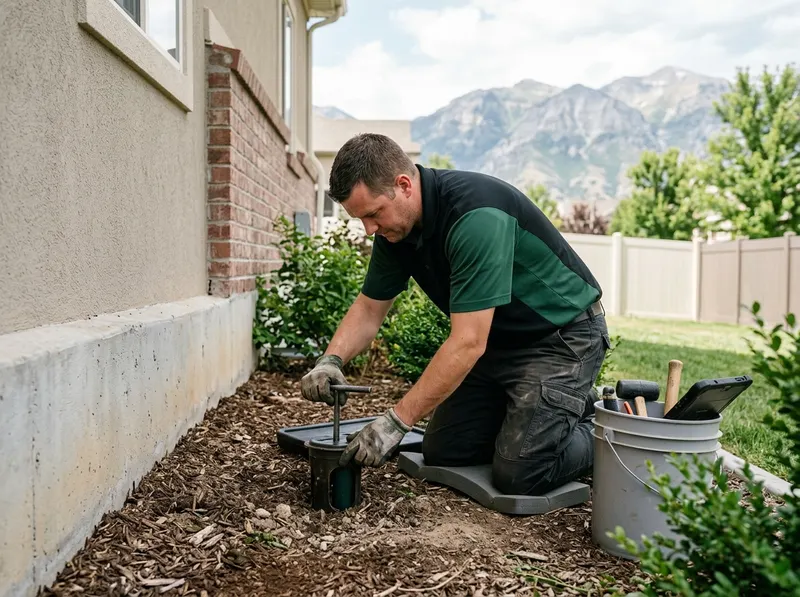
Subterranean termites nest underground and construct distinct, pencil-wide mud shelter tubes across foundation walls to reach structural wood studs without drying out. In residential zones near the Provo River such as Rivergrove and Fort Utah, elevated soil moisture levels accelerate subsurface colony foraging compared to drier bench areas like Tree Rock and Edgemont. Treating this specific species requires placing an undetectable, slow-acting transfer agent into the soil or installing low-profile perimeter bait stations. The target material is brought back to the underground queen through grooming, neutralizing the colony over 60 to 90 days rather than simply repelling the insects into adjacent framing timbers.
Selecting liquid perimeter trenching versus bait monitoring stations depends on structural foundation architecture. Homes built on crawl spaces in older sections like Joaquin or Provost benefit from continuous liquid perimeter applications, creating an unbroken protective perimeter along stem walls. Slab-on-grade homes in Grandview North, Grandview South, and Spring Creek frequently utilize tamper-resistant monitoring stations set flush into turf or garden beds every 10 to 15 feet. Monitoring cartridges use targeted chitin inhibitors that affect only molting insects, eliminating airborne chemicals inside living spaces where children and household pets play.
The mechanical process proceeds through four clear stages. First, a technician conducts a visual inspection along floor joints, basement baseboards, and exterior foundation edges to map mud tubing and wood hollows. Second, perimeter ground clearance is measured down to the footing depth, typically 4 to 6 inches deep in residential landscaping. Third, bait stations or targeted soil applications are deployed using child-safe locking covers. Fourth, monitoring stations undergo scheduled quarterly checkups to record bait consumption rates and colony retreat metrics without interior chemical dispersal.
Every job gets a firm, written price after a free on-site visit.
Tell us about your subterranean termite treatment and monitoring job in Provo and we'll send a clear, written quote, usually the same day.
 Praxeno Pest Services