Stinging insect activity peaks across Utah County between late June and October as ambient temperatures regularly exceed 90 degrees Fahrenheit. Paper wasps typically suspend open, umbrella-shaped comb nests beneath the…
Stinging insect activity peaks across Utah County between late June and October as ambient temperatures regularly exceed 90 degrees Fahrenheit. Paper wasps typically suspend open, umbrella-shaped comb nests beneath the deep fascia of two-story homes in neighborhoods like Edgemont, Tree Rock, and Timpview. In contrast, aerial bald-faced hornets construct enclosed, gray cellulose globes high within mature cottonwood trees near the Provo River in Rivergrove and Fort Utah. Yellowjackets present a distinct domestic risk by colonizing subterranean rodent tunnels in Spring Creek lawns or nesting directly inside wall voids through unsealed weep holes along brick veneer in Grandview South and Joaquin.
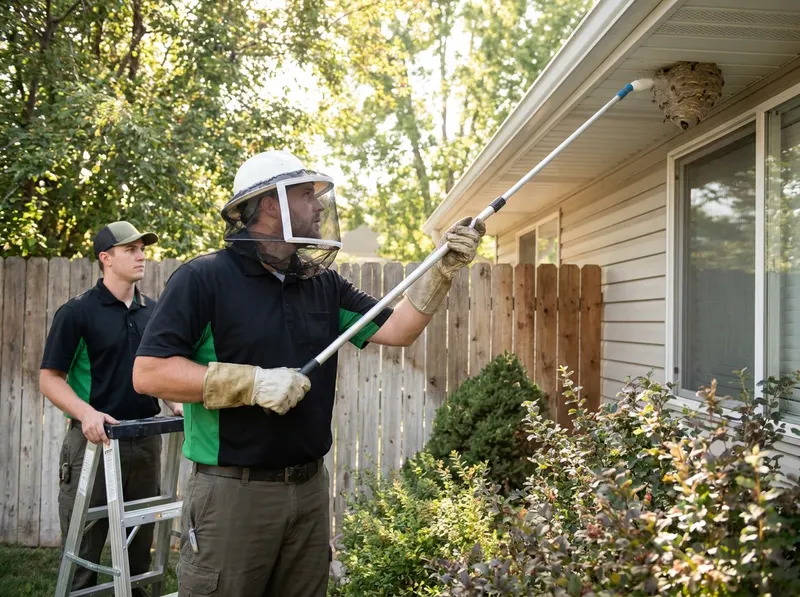
Targeted physical removal paired with micro-aerosol or botanical dust injection differs substantially from generic property sprays. Store-bought chemical sprays disperse broad-spectrum neurotoxins that scatter defensive colonies, often forcing stinging workers into window frames, attic vents, and interior living quarters. Professional treatment isolates the specific nesting cavity using directional extendable poles and non-volatile compounds that neutralize the queen and guard workers on contact. Once activity stops, accessible nests are physically scraped down to eliminate residual pheromone trails that attract opportunistic rebuilders the following spring.
Decision factors depend on the structural context of the nest. If an open paper wasp nest is located under an accessible single-story patio cover, a basic targeted physical sweep is completed quickly. If yellowjackets have established an active flight path behind siding, soffit material, or directly adjacent to central air conditioning units, specialized void dusting is required to eliminate larvae deep inside the framing without cutting into drywall. The trade-off between exterior removal and wall-void extraction involves access and settling time: exterior aerial nests resolve immediately upon takedown, whereas internal void colonies require a 24-hour settling period to ensure every foraging worker returning to the structure contacts the localized residual agent.
Every job gets a firm, written price after a free on-site visit.
Tell us about your wasp, hornet, and yellowjacket removal job in Provo and we'll send a clear, written quote, usually the same day.
 Praxeno Pest Services